
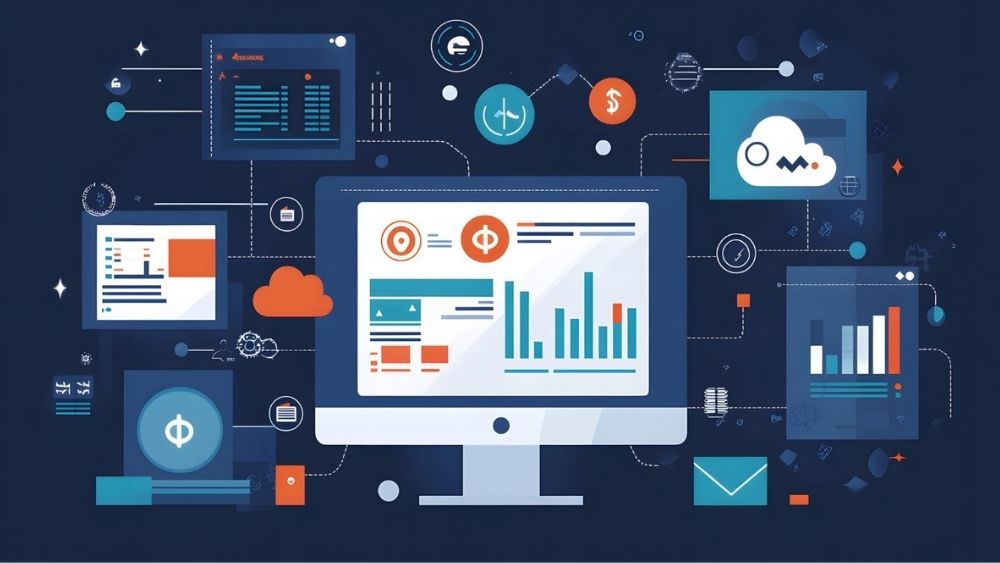
The Massive Problem Hiding in Your Marketing Tech Stack
Every marketing leader faces the same brutal reality: you’re investing heavily in tools, yet performance keeps stagnating. Your team drowns in dashboards that contradict each other. Leadership questions every metric you present. And somehow, despite having more data than ever, you can’t answer simple questions like “Which channel actually drives revenue?”
The numbers tell a stark story. Research shows that 47% of marketing spend is completely wasted due to broken attribution and fragmented data. Meanwhile, 51% of CTOs openly admit they don’t trust the data coming from their marketing platforms.
This isn’t a tool problem. It’s a data architecture problem.
The modern marketing stack has exploded, with organizations now managing dozens of tools. But bigger stacks haven’t delivered better results—they’ve created a fragmented mess where:
- Paid media data lives in ad platforms
- CRM data sits in Salesforce or HubSpot
- E-commerce data resides in Shopify
- Analytics data exists in GA4
- Attribution tools tell completely different stories
Each platform reports success using its own metrics and attribution models. The result? Marketing teams spend 60% of their time reconciling data instead of optimizing campaigns.
This comprehensive guide reveals why traditional approaches fail and how a unified marketing data platform transforms fragmented chaos into competitive advantage.
What Is a Unified Marketing Data Platform?
Simple Definition: A unified marketing data platform centralizes, standardizes, and connects data from all marketing, sales, and customer touchpoints into a single, trusted source for analysis and decision-making.
Unlike traditional tools that simply visualize or store data, a unified platform actively solves the fundamental problem: data fragmentation.
How It Differs From Other Solutions
Customer Data Platforms (CDPs) focus primarily on customer profiles and audience segmentation. They excel at identity resolution but often lack comprehensive marketing performance analytics and multi-touch attribution capabilities.
Business Intelligence (BI) Tools like Tableau, Looker, or PowerBI create beautiful visualizations—but they can’t fix underlying data inconsistencies. These tools display whatever data you feed them. If that data is fragmented, conflicting, or incomplete, your dashboards will be “pretty but wrong.”
Native Ad Platform Dashboards (Facebook Ads Manager, Google Ads, LinkedIn Campaign Manager) optimize for their own platforms. Each claims credit using different attribution windows, conversion tracking methodologies, and success metrics. This creates the infamous “attribution overlap” where platforms collectively claim 180% of your conversions.
Data Warehouses like Snowflake provide storage infrastructure but require extensive engineering resources to build and maintain data pipelines, transformation logic, and business metrics on top.
A true unified marketing data platform handles the complete workflow: data collection, standardization, identity resolution, attribution modeling, and insights generation—all in one integrated solution.
The Real Cost of Fragmented Marketing Data
What Fragmented Data Actually Looks Like
Most organizations don’t recognize fragmentation until they try to answer fundamental business questions. Here’s what it looks like in practice:
Scenario 1: The Attribution Chaos Your paid media manager reports that Facebook delivered a 3.5X ROAS last month. Your email marketing manager claims email drove 40% of revenue. Your Google Ads specialist insists search is your most efficient channel at 4.2X ROAS. Meanwhile, your finance team’s revenue report shows actual growth was only 12%, and they’re demanding you cut the marketing budget because “none of these numbers add up.”
All three channel managers are looking at accurate data—from their platform’s perspective. But because each platform uses different attribution windows, conversion tracking methods, and last-touch vs. multi-touch models, they’re each claiming credit for overlapping conversions.
Scenario 2: The Reporting Time Sink Your data analyst spends every Monday morning manually pulling data from 12 different platforms into spreadsheets, then spending hours reconciling why Facebook says you spent $47,382 but your accounting system shows $49,201. By the time they create a weekly report, it’s Wednesday afternoon—and the data is already outdated.
Scenario 3: The Optimization Paralysis Your CMO asks: “Should we shift budget from Meta to Google, or double down on email?” Your team can’t answer with confidence because:
- Meta’s conversion tracking broke after iOS 14.5 changes
- Google Ads shows different conversion numbers than GA4
- Your email platform doesn’t track post-click behavior
- Nobody knows which touchpoints actually contributed to closed deals
Without unified data, you’re optimizing channels in isolation rather than maximizing business outcomes.
The Business Impact: Beyond Frustration to Lost Revenue
The consequences of data fragmentation extend far beyond annoying meetings and reporting delays:
1. Conflicting KPIs Paralyze Decision-Making When marketing reports 42% MoM growth while finance shows 12%, leadership loses confidence in all marketing data. Strategic decisions get delayed or made based on gut feeling rather than insights.
2. Wasted Ad Spend Compounds Daily Without accurate attribution, you continue investing in underperforming channels while underfunding your most effective tactics. Organizations often discover they’re heavily investing in channels that show strong metrics but deliver minimal incremental value.
3. Teams Optimize for Metrics That Don’t Matter Channel managers naturally optimize for the metrics they can measure within their platforms. Facebook specialists maximize ROAS within Facebook Ads Manager. Email marketers optimize open rates and click-through rates. But these local optimizations often work against global business objectives.
4. Competitive Disadvantage Accelerates While your team spends 60% of their time on reporting and reconciliation, competitors with unified data systems spend that time testing new channels, optimizing creative, and capturing market share.
5. AI and Automation Initiatives Fail The promise of AI-powered marketing automation is built on a foundation of clean, unified data. Fragmented data means your AI tools make decisions based on incomplete or contradictory information, often making things worse rather than better.
Why This Problem Is Accelerating
Three major trends are making data fragmentation worse, not better:
The Martech Explosion The marketing technology landscape continues to expand exponentially, with thousands of available tools. Each new tool adds another data silo, another integration to maintain, and another source of truth to reconcile.
Privacy-First Changes iOS 14.5 App Tracking Transparency, cookie deprecation, and privacy regulations have fundamentally broken traditional tracking methodologies. Platforms now report 20-40% fewer conversions than actually occurred, with different platforms experiencing different levels of signal loss.
Organizational Silos As marketing teams specialize, they naturally adopt specialized tools. Paid media teams use their stack, content teams use theirs, email teams have their own platforms. Each team optimizes for their own goals using their own data, creating organizational fragmentation that mirrors technical fragmentation.
Marketing Data Silos: The Silent Growth Killer
What Are Marketing Data Silos?
A data silo exists when information is collected, stored, and analyzed in isolation from other relevant data sources. In marketing, this typically manifests as:
Technical Silos: Data trapped within individual platforms (Facebook Ads, Google Analytics, Shopify, HubSpot) that don’t communicate effectively with each other.
Organizational Silos: Different teams using different tools and measuring different KPIs without coordination or shared definitions.
Process Silos: Workflows that involve manually exporting data from multiple sources, combining in spreadsheets, and distributing via email—a process that’s slow, error-prone, and impossible to scale.
The Hidden Danger: Local Success, Global Failure
Perhaps the most insidious aspect of data silos is that they enable local optimization that damages overall business performance.
Consider this real example: An e-commerce company’s paid social team was crushing their ROAS targets, consistently delivering 4.5X returns according to Facebook Ads Manager. The executive team was thrilled—until their finance team revealed the company was actually losing money.
What happened? The paid social team was optimizing Facebook’s last-click attribution model, which heavily favored retargeting campaigns. They shifted 80% of budget to retargeting, which showed exceptional ROAS because these ads reached customers already planning to purchase. Meanwhile, top-of-funnel prospecting campaigns—which actually created new demand—were starved of budget because they showed lower last-click ROAS.
The result: incredible efficiency (high ROAS on retargeting) but collapsing effectiveness (declining new customer acquisition). This is the danger of siloed optimization.
Why Dashboards Alone Can’t Fix Silos
Many organizations attempt to solve fragmentation by investing in enterprise BI tools like Tableau, Looker, or PowerBI. These tools create visually impressive dashboards that pull data from multiple sources.
The problem: visualization doesn’t equal unification.
BI tools display whatever data you connect to them, but they don’t:
- Standardize inconsistent naming conventions across platforms
- Resolve identity conflicts when the same customer has multiple IDs
- Reconcile conflicting attribution models between platforms
- Clean and deduplicate data automatically
- Create unified business logic for metrics like CAC, LTV, and ROAS
A dashboard showing fragmented data is just a prettier version of the same problem. You get “pretty dashboards, wrong answers.”
Why Traditional Martech Stack Optimization Fails
The Common (But Wrong) Approach
When marketing performance stagnates, organizations typically try one of these approaches:
Approach 1: Adding More Tools “We need better attribution, so let’s add an attribution platform on top of our existing stack.” This rarely works because the new platform faces the same data fragmentation issues as your existing tools. You’re just adding another layer to an already unstable foundation.
Approach 2: Switching Platforms “Let’s migrate from HubSpot to Salesforce” or “Let’s move from Google Analytics to Adobe Analytics.” Platform switching is expensive, disruptive, and usually doesn’t solve the core issue—data remains fragmented, just in different systems.
Approach 3: Hiring Agencies or Consultants
“Let’s bring in a marketing analytics agency to fix our reporting.” Agencies can build sophisticated reports, but if the underlying data is fragmented and inconsistent, their reports will be too. You’re paying for more polished presentations of flawed data.
The Real Bottleneck: Data Foundation
The harsh reality: tool optimization without data unification is purely cosmetic.
Think of it like renovating a house with a cracked foundation. You can install beautiful countertops, paint the walls, and upgrade the fixtures—but if the foundation is broken, the house will continue to deteriorate regardless of how nice it looks.
Similarly, you can optimize your ad creative, A/B test landing pages, and implement conversion rate optimization tactics—but if your data foundation is fragmented, you’re making decisions based on incomplete or inaccurate information. Some optimizations will work by accident, others will fail despite solid reasoning, and you won’t be able to reliably distinguish between the two.
The Garbage In, Garbage Out Principle
Data scientists have a saying: “garbage in, garbage out.” No matter how sophisticated your analysis, machine learning models, or AI automation—if the input data is fragmented, inconsistent, or inaccurate, the outputs will be unreliable.
This principle applies directly to marketing technology:
- Attribution models built on incomplete conversion data will misallocate credit
- Predictive analytics trained on fragmented customer journeys will make wrong predictions
- Automated bidding optimizing for inaccurate conversion signals will waste budget
- Personalization engines working from partial customer profiles will deliver irrelevant experiences
The solution isn’t better algorithms—it’s better data.
Key Marketing Data Platform Benefits: What Changes When Data Is Unified
1. One Source of Truth for Marketing & Revenue Performance
The most immediate benefit of unified data is ending the “meeting about meetings” where teams argue over whose numbers are correct.
With standardized data definitions, everyone works from the same metrics:
Customer Acquisition Cost (CAC): Instead of three different CAC calculations (paid media CAC, blended CAC, fully-loaded CAC), you have one definition that everyone understands and trusts.
Lifetime Value (LTV): Rather than estimates based on cohort analysis, you have actual LTV calculated from complete customer purchase history across all channels.
Return on Ad Spend (ROAS): Instead of platform-specific ROAS that inflates performance through attribution overlap, you have multi-touch attributed ROAS that accurately reflects each channel’s contribution.
Conversion Rate: Rather than different conversion definitions for each platform, you have consistent funnel metrics measuring meaningful business events.
This shared understanding transforms strategy discussions from arguing about numbers to acting on insights.
2. Accurate Multi-Touch Attribution & Measurement
Single-touch attribution (first-touch or last-touch) fundamentally misrepresents how modern customer journeys work. Research shows modern buyers have numerous touchpoints before purchase—B2B buyers often have dozens of interactions, while e-commerce customers typically have multiple touchpoints across several channels.
Unified data enables sophisticated multi-touch attribution models that:
Credit All Contributing Channels: Rather than giving 100% credit to the last click, attribution models distribute credit across the entire journey—social awareness, search research, email nurture, retargeting, direct conversion—based on each touchpoint’s actual contribution.
Measure View-Through Attribution: Up to 95% of conversions involve view-through touchpoints (seeing an ad without clicking). Unified platforms can track which ads someone saw, even if they didn’t click, and credit those impressions appropriately.
Reveal the Halo Effect: Display and social advertising don’t just drive direct clicks—they increase direct and organic traffic as customers become aware of your brand. Multi-touch attribution quantifies this “halo effect” that single-touch models completely miss.
Expose Incrementality: Perhaps most importantly, proper attribution helps identify which marketing actually creates new demand versus which marketing just captures demand that already existed. This is the difference between growth and efficiency theater.
3. Faster, More Confident Decision-Making
In fast-moving markets, the ability to make quick, confident decisions creates competitive advantage. Unified data platforms accelerate decision-making by eliminating two major time sinks:
Manual Data Reconciliation: When your analyst isn’t spending 60% of their time pulling data from multiple platforms into spreadsheets and debugging why numbers don’t match, they can spend that time on actual analysis and strategic recommendations.
Verification Delays: With trusted, unified data, you don’t need multiple rounds of “can you double-check these numbers?” before making decisions. Leadership can act on insights immediately rather than waiting days or weeks for data validation.
Real Example: Billy Footwear, a LayerFive client, reduced their weekly reporting process from 8 hours to 15 minutes. This freed their team to run 3x more campaign experiments, leading to 36% revenue growth with only 7% increased ad spend.
4. Better Cross-Functional Alignment
Data fragmentation doesn’t just hurt marketing—it creates friction across the entire organization.
Marketing-Sales Alignment: When sales and marketing work from different definitions of “qualified lead” or “conversion,” they naturally conflict. Unified data creates shared metrics and shared understanding.
Marketing-Finance Alignment: Finance teams lose confidence in marketing when reported performance doesn’t match revenue reality. Unified data reconciles marketing metrics with financial outcomes, earning finance’s trust and partnership.
Executive Confidence: When the entire C-suite sees the same metrics and understands they’re based on unified, trustworthy data, strategic decisions happen faster and with greater conviction.
5. Scalable Growth Without Tool Sprawl
Perhaps the most underappreciated benefit: unified data platforms enable growth without constantly adding new tools to your stack.
Add Channels Without Breaking Reporting: When you expand into TikTok, Pinterest, or emerging channels, unified platforms integrate those data sources without rebuilding your entire reporting infrastructure.
Test New Tactics Confidently: Want to test influencer marketing, podcast advertising, or affiliate partnerships? Unified platforms let you properly measure and attribute performance from the start, rather than hoping you can figure out tracking after launch.
Future-Proof Data Architecture: As privacy regulations evolve, new platforms emerge, and tracking methodologies change, unified platforms adapt without requiring you to rebuild your entire martech stack.
How Unified Data Transforms AI, Analytics & Automation
The AI revolution in marketing isn’t about artificial intelligence—it’s about data-powered intelligence. And AI is only as good as the data it works with.
Why AI Fails on Fragmented Data
Machine learning models and AI agents make predictions and decisions based on patterns in historical data. When that data is incomplete, inconsistent, or contradictory, AI makes wrong predictions.
Common AI failures caused by fragmented data:
Predictive Bidding Algorithms: Meta’s Advantage+ and Google’s Target ROAS bidding need accurate conversion data. When conversion tracking is broken (iOS 14.5 impact), these algorithms optimize for phantom conversions, wasting budget.
Customer Churn Prediction: If your churn model only sees email engagement data but misses purchase behavior, it will flag active customers as churn risks while missing actual at-risk customers.
Product Recommendations: Recommendation engines that only see on-site behavior miss cross-channel purchase patterns, leading to irrelevant suggestions that hurt conversion rates.
Attribution Models: Even sophisticated data-driven attribution models produce garbage results when trained on incomplete conversion data with identity resolution gaps.
The Unified Data Advantage for AI
When AI works with unified, clean data, it becomes remarkably effective:
Accurate Predictive Audiences: Unified customer profiles enable AI to score visitors for purchase propensity, engagement likelihood, and product affinity—then activate those audiences across all channels.
Automated Budget Optimization: With accurate multi-touch attribution, AI can automatically shift budgets to channels and campaigns with the highest incremental ROAS, rather than those gaming attribution systems.
Intelligent Personalization: AI-powered personalization engines can tailor messaging, products, and offers based on complete customer journey data rather than partial glimpses.
Proactive Insights: Agentic AI can monitor unified data in real-time, automatically detecting performance anomalies, identifying opportunities, and even taking action without human intervention.
Preparing for the Agentic AI Era
We’re entering the age of agentic AI—autonomous systems that don’t just provide insights but take action on your behalf:
- AI agents that automatically adjust bids, budgets, and creative based on performance
- Systems that identify underperforming segments and automatically create recovery campaigns
- Platforms that detect inventory trends and launch promotional campaigns automatically
- Agents that write, test, and optimize ad copy and email content continuously
All of these capabilities require one thing: unified, contextual, identity-resolved data.
LayerFive’s vision centers on this reality. As co-founder Sanjay Gajwani explains: “AI isn’t just data-hungry. It’s context-hungry. And in marketing, context means identity with behavioral data. That’s what separates marketing automation that wastes money from agentic AI that drives profitable growth.”
Common Myths About Marketing Data Platforms
Myth 1: “We Already Have a CDP”
Reality: CDPs and unified marketing data platforms serve different purposes.
CDPs excel at customer identity resolution and audience segmentation. They create unified customer profiles by stitching together data from various touchpoints. However, most CDPs lack:
- Comprehensive marketing performance analytics across all channels
- Sophisticated multi-touch attribution modeling
- Media mix modeling and incrementality testing
- Real-time campaign performance monitoring
- Integration with budgeting and planning workflows
A unified marketing data platform includes identity resolution (like a CDP) plus complete marketing intelligence, attribution, and analytics.
Think of it this way: CDPs answer “who are our customers?” Unified marketing data platforms answer “who are our customers and which marketing activities are worth investing in?”
Myth 2: “Our BI Tool Solves This”
Reality: BI tools visualize data; they don’t unify it.
Tableau, Looker, PowerBI, and similar tools are exceptional at creating dashboards and reports. But they’re downstream tools that display whatever data you feed them.
BI tools don’t:
- Standardize inconsistent naming conventions across platforms
- Resolve identity conflicts in customer data
- Reconcile conflicting attribution models
- Clean and deduplicate data automatically
- Apply business logic to calculate unified metrics
You can build a beautiful Looker dashboard showing data from 15 different platforms—and every metric will still be wrong because the underlying data is fragmented.
Myth 3: “It’s Too Complex for Mid-Sized Teams”
Reality: Fragmented data is actually more complex than unified data.
Consider what mid-sized teams currently manage:
- Data connections to 10-20 different platforms
- Manual exports and imports every week or month
- Spreadsheets reconciling conflicting numbers
- Multiple versions of the “source of truth”
- Constant firefighting when numbers don’t match
This scattered approach is far more complex and time-consuming than implementing a unified platform once.
Modern unified platforms like LayerFive are designed specifically for mid-market companies. Setup takes hours, not months. Pricing starts at $49/month, not hundreds of thousands annually. And you can implement gradually, starting with core data sources and expanding over time.
Myth 4: “We’ll Fix It Later When We Scale”
Reality: Data fragmentation gets harder to fix as you grow, not easier.
Every month you operate with fragmented data:
- You make decisions based on inaccurate information, some of which damage long-term growth
- Your team builds processes around manual reconciliation that become entrenched habits
- You accumulate technical debt as different systems use different tracking implementations
- You lose historical data context that would inform future decisions
Meanwhile, competitors with unified data capture market share because they make better decisions faster.
The right time to unify your data is before it becomes a crisis that requires ripping out your entire martech stack.
How to Know If You Need a Unified Marketing Data Platform
The Checklist: Warning Signs Your Data Is Fragmented
You likely need unified data if:
✓ Different teams report different numbers for the same metrics – Your paid media team says one CAC, finance calculates a different CAC, and nobody agrees which is correct.
✓ Leadership doesn’t trust your dashboards – Executives ask clarifying questions about every metric and delay decisions until numbers are “validated.”
✓ Attribution debates dominate strategy meetings – More time is spent arguing about which channel deserves credit than discussing how to grow.
✓ Scaling channels creates reporting chaos – Every new channel you add makes reporting exponentially more complex and time-consuming.
✓ Your data analyst spends 60%+ time on reporting, not insights – They’re constantly pulling data from multiple platforms, reconciling numbers, and debugging tracking issues.
✓ You can’t answer basic questions confidently:
- “What’s our true customer acquisition cost across all channels?”
- “Which marketing channel has the highest incrementality?”
- “How many touchpoints does the average customer need before converting?”
- “Which campaigns are actually driving new revenue vs. capturing existing demand?”
✓ Platform attribution numbers don’t match reality – Facebook, Google, and email platforms collectively claim 180% of your conversions.
✓ Your team uses different definitions for key metrics – Three different spreadsheets calculate ROAS three different ways.
✓ You recently experienced tracking disruption – iOS 14.5, cookie deprecation, or platform API changes broke your measurement, and you’re still not confident in the data.
✓ AI and automation initiatives underperform – You’ve tried automated bidding, predictive audiences, or AI optimization, but results are disappointing.
The Growth Inflection Point Test
Ask yourself: “If I doubled my marketing budget tomorrow, would I know how to allocate it for maximum ROI?”
If your honest answer is “no” or “probably not,” you have a data problem that’s limiting growth.
Companies with unified data can answer this question confidently because they know:
- Which channels have room to scale profitably
- Which audiences convert at the highest rates
- Which creative themes drive incremental performance
- Where diminishing returns start for each tactic
This confidence enables aggressive, efficient scaling.
The LayerFive Approach to Unified Marketing Data
Four Products, One Integrated System
LayerFive takes a different approach than traditional analytics vendors. Rather than one monolithic platform or fragmented point solutions, LayerFive offers four interconnected products that work together:
LayerFive Axis: Unified Reporting & Analytics Connects all marketing and advertising data sources within minutes—no data engineering required. Replaces expensive data collection tools (Supermetrics, Funnel.io) and BI reporting platforms with unified dashboards, custom reports, and creative analytics.
Starting at $49/month vs. $60K-$200K annually for traditional BI stack
LayerFive Signal: Attribution & ID Resolution
First-party data collection via L5 Pixel enables granular identity resolution (2-5X better than competitors), comprehensive web analytics, multi-touch attribution, media mix modeling, and customer journey insights—all in one platform.
Consolidates web analytics, attribution tools, and customer data platforms while providing attribution accuracy competitors can’t match.
LayerFive Edge: Predictive Audiences & Personalization AI scoring for engagement propensity, purchase likelihood, and product affinity. Builds predictive audiences and activates them across email, SMS, and ad platforms automatically.
Directly impacts revenue by converting more visitors through intelligent targeting and personalization.
LayerFive Navigator: Agentic AI Layer Out-of-the-box AI agents that monitor performance, detect anomalies, and provide insights before you ask. Includes trained chatbot for complex marketing questions plus MCP server for enterprise AI tool integration.
Enables 10X marketing efficiency through automated insights and actions.
Platform-Agnostic Philosophy
LayerFive doesn’t force you to replace your existing tools. Instead, it unifies data from whatever platforms you already use:
- E-commerce: Shopify, WooCommerce, Magento, BigCommerce
- Advertising: Meta, Google, TikTok, Pinterest, Snapchat, LinkedIn
- Email/SMS: Klaviyo, Mailchimp, Attentive, Postscript
- CRM: Salesforce, HubSpot, Pipedrive
- Analytics: Google Analytics, Mixpanel, Amplitude
You keep the specialized tools that work for you while gaining unified data infrastructure underneath.
Built for Multiple Segments
Unlike platforms built exclusively for enterprise or exclusively for small businesses, LayerFive serves three distinct segments:
Shopify E-commerce Brands: Direct response marketing focused on ROAS, attribution, and conversion optimization.
Marketing Agencies: Agency-level dashboards, generous revenue sharing (20% first year, 10% second year), easy client onboarding.
B2B SaaS Companies: Complete PLG and SLG funnel visibility including pipeline, revenue, LTV, and channel effectiveness.
This multi-segment approach reflects real market needs rather than forcing every company into one template.
Real Results: The Billy Footwear Case Study
Numbers tell the story best. Billy Footwear, an adaptive footwear brand, implemented LayerFive’s unified data platform with remarkable results:
36% revenue growth year-over-year
Only 7% increase in ad spend
How did they achieve this dramatic efficiency improvement?
Before LayerFive:
- Spent 8+ hours weekly pulling data from multiple platforms into spreadsheets
- Couldn’t identify which campaigns actually drove incremental sales
- Over-invested in retargeting (high ROAS on paper, low incrementality in reality)
- Under-invested in prospecting (lower apparent ROAS, but created new demand)
- Made optimization decisions based on incomplete attribution
After LayerFive:
- Reduced reporting time to 15 minutes weekly (97% time savings)
- Gained accurate multi-touch attribution showing true channel contribution
- Rebalanced budget from retargeting to prospecting based on incrementality data
- 2-5X improvement in visitor identification enabling better targeting
- Freed team capacity for 3X more campaign experiments
The key insight: they weren’t working harder—they were working with better data.
Their team could finally see which marketing actually created demand versus which marketing just captured existing demand. This insight alone transformed budget allocation, enabling dramatic growth without corresponding spend increases.
Future of Marketing: Unified Data as Competitive Advantage
How Competition Is Changing
Marketing leaders will increasingly be judged not on the size of their budgets or the sophistication of their tools, but on decision quality.
Can you make fast, confident decisions that drive growth? Or do you spend weeks debating metrics while competitors capture market share?
In five years, unified data infrastructure will separate winners from losers:
Winners will:
- Make dozens of optimization decisions weekly based on trusted data
- Test new channels and tactics confidently, knowing they can measure results accurately
- Scale successful campaigns aggressively without fear of hidden inefficiencies
- Leverage agentic AI to automate routine optimization while focusing strategy on higher-level questions
Losers will:
- Continue arguing about whose attribution model is “right”
- Miss opportunities because reporting takes too long
- Waste budget on channels that look good in isolation but damage overall performance
- Fall behind competitors using AI-powered optimization built on unified data
The Agentic AI Imperative
Every marketing technology vendor is racing to add “AI” to their platform. But AI without unified data is just expensive guessing.
The marketers who will dominate the next decade are those who:
- Build unified data infrastructure first – Clean, standardized, identity-resolved data across all touchpoints
- Layer intelligence on top – Attribution models, predictive scoring, automated insights
- Enable agentic AI workflows – Systems that take action automatically based on data signals
This progression isn’t optional—it’s the foundation of competitive marketing.
As Sanjay Gajwani, LayerFive co-founder, explains: “We’re building the backbone for contextual data that feeds all marketing activities. The winners in the agentic AI era won’t be those with the best algorithms—they’ll be those with the best data feeding those algorithms.”
What This Means for Your Strategy
If you’re a marketing leader, CMO, or growth executive, unified data is no longer a “nice to have.” It’s fundamental infrastructure for:
- Accurate measurement in a privacy-first world where traditional tracking is broken
- Efficient budget allocation when every dollar of waste compounds over time
- AI-powered optimization that actually works because it’s built on trustworthy data
- Executive credibility when you can defend every metric with unified data
The organizations that unify their data now will have 3-5 years of competitive advantage while others struggle with fragmentation.
The question isn’t whether to unify your data. It’s whether you’ll do it before or after your competitors.
Final Takeaway: Tools Don’t Drive Growth—Data Does
After reading 6,000+ words about unified marketing data platforms, the core message is simple:
Your marketing stack isn’t failing because you have the wrong tools. It’s failing because those tools can’t talk to each other.
Every platform in your stack—Facebook, Google, Shopify, Klaviyo, Salesforce—is excellent at its specific job. The problem is they each optimize in isolation, creating fragmented data that makes coordinated strategy impossible.
47% of marketing spend is wasted because of this fragmentation. 51% of CTOs don’t trust their marketing platform data. The average data analyst spends 60% of their time on reporting instead of insights.
This isn’t just annoying—it’s a competitive disadvantage that compounds daily.
The solution isn’t adding more tools or switching platforms. It’s building unified data infrastructure that connects everything you already have.
Three actions you can take today:
- Audit your current state – Use the checklist in this guide to identify specific ways data fragmentation hurts your organization
- Calculate the cost – Estimate how much time your team wastes reconciling data, how much budget you’re misallocating due to poor attribution, and how much growth you’re missing
- Build the business case – Use these numbers to justify investing in unified data infrastructure before fragmentation gets worse
Remember Billy Footwear: 72% revenue growth with only 7% increased spend. That’s not magic—it’s what happens when you make decisions based on unified, trustworthy data instead of fragmented guesses.
The brands that win in the next decade won’t be those with the biggest budgets or fanciest tools. They’ll be those with the best data infrastructure enabling the fastest, most confident decisions.
Is your marketing stack built on solid data infrastructure, or is it built on sand?
Frequently Asked Questions
What is a marketing data platform?
A marketing data platform centralizes data from all marketing and advertising sources, standardizes that data into consistent formats and definitions, resolves identity conflicts, and provides unified analytics and attribution. Unlike visualization tools or CDPs, it solves the complete workflow from data collection to actionable insights.
What are the benefits of unified marketing data?
Unified marketing data enables: (1) Accurate multi-touch attribution across all channels, (2) Faster decision-making without manual reconciliation, (3) Confident budget allocation based on true ROI, (4) Better cross-functional alignment on shared metrics, (5) AI-powered optimization that actually works, and (6) Scalable growth without tool sprawl.
How do marketing data silos impact ROI?
Data silos cause teams to optimize channels in isolation rather than maximizing business outcomes. This creates “local success, global failure” where individual channels show great performance but overall business results disappoint. Research shows 47% of marketing spend is wasted due to fragmented data and broken attribution.
What’s the difference between a CDP and a unified marketing data platform?
CDPs focus on customer identity resolution and audience segmentation. Unified marketing data platforms include identity resolution plus comprehensive marketing analytics, multi-touch attribution, media mix modeling, campaign performance tracking, and integration with budgeting workflows. Think of it as CDP capabilities plus complete marketing intelligence.
How much does a unified marketing data platform cost?
Traditional enterprise platforms cost $200K-$850K annually. Modern solutions like LayerFive start at $49/month for small businesses and scale based on ad spend and data volume. The ROI typically comes from: (1) Eliminating wasted ad spend, (2) Replacing multiple expensive tools with one platform, and (3) Freeing team time from manual reporting for strategic work.
Can small and mid-sized companies benefit from unified data?
Absolutely. In fact, smaller companies often see faster ROI because they can implement unified data without complex enterprise politics or legacy system constraints. Companies spending $50K-$500K monthly on marketing typically achieve 20-50% efficiency improvements within 90 days by eliminating wasted spend identified through accurate attribution.
How long does it take to implement a unified marketing data platform?
Implementation time varies by platform complexity. Enterprise solutions require 3-6 months of data engineering work. Modern platforms like LayerFive can connect core data sources within hours and expand to comprehensive unification within 2-4 weeks. The key is starting with high-priority data sources and expanding iteratively.
Ready to unify your marketing data?
LayerFive consolidates your marketing stack into one unified platform—no data engineering required. Connect all your data sources in minutes, gain accurate multi-touch attribution, and start making confident decisions based on trustworthy metrics.
Visit layerfive.com to see how we help brands like Billy Footwear achieve 36% revenue growth with minimal increases in ad spend.
About LayerFive
LayerFive is a unified marketing intelligence platform that solves the critical problem of fragmented marketing data. With industry-leading first-party ID resolution, comprehensive multi-touch attribution, and agentic AI capabilities, LayerFive enables marketers to make confident decisions that drive profitable growth. Serving e-commerce brands, marketing agencies, and B2B SaaS companies, LayerFive replaces expensive, fragmented tool stacks with an integrated solution starting at $49/month.