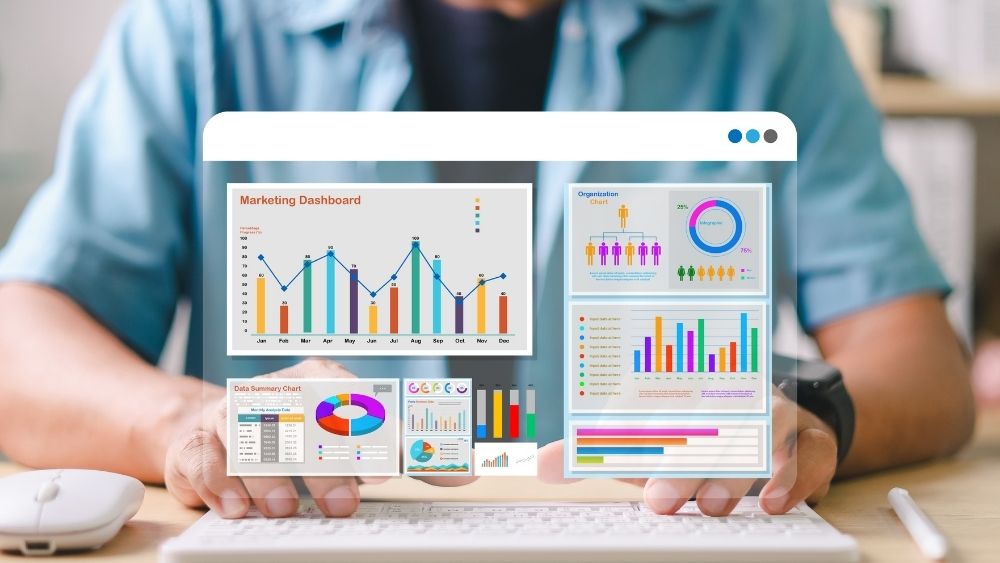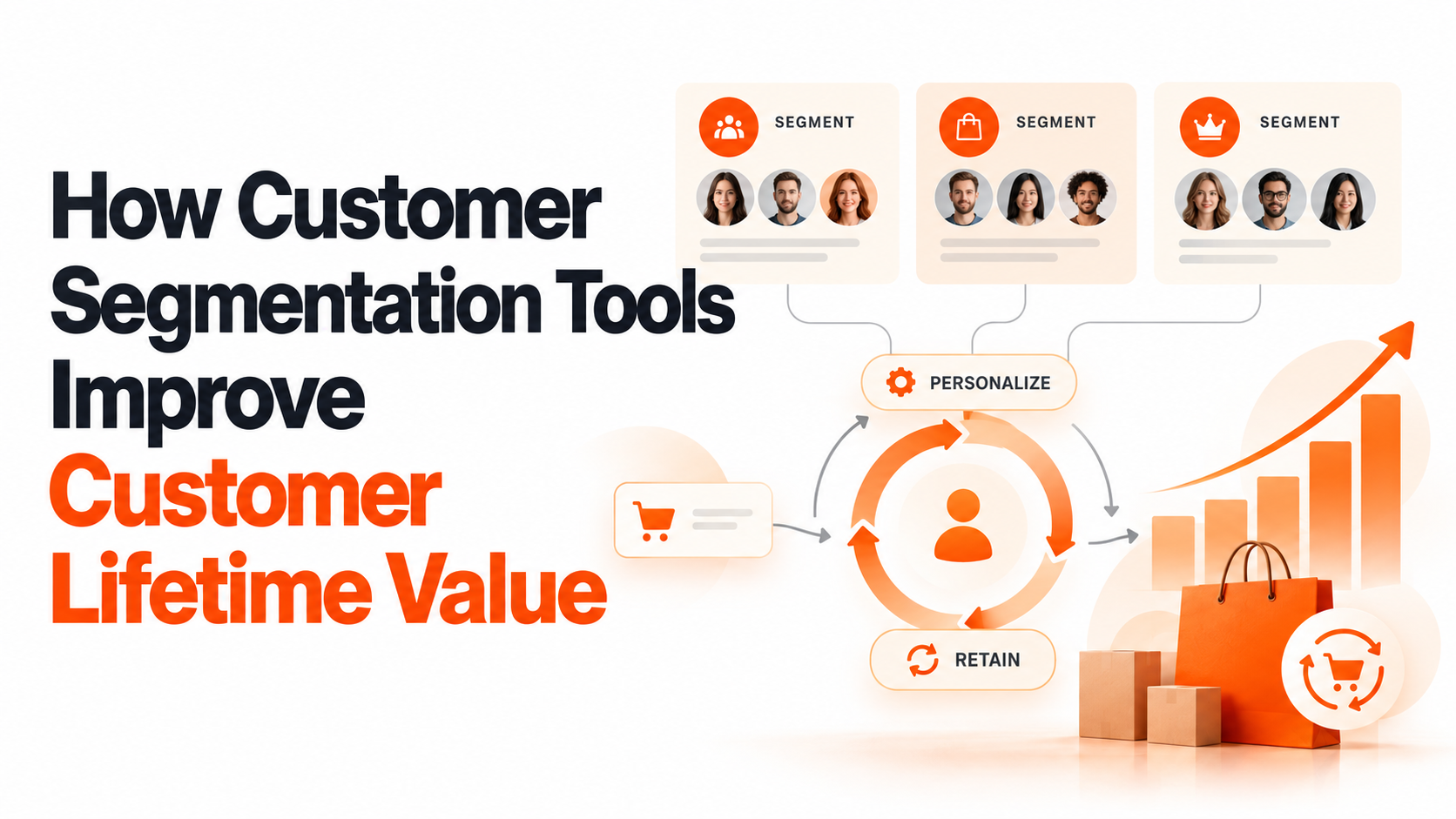

An AI analytics platform is a unified software system that collects first-party marketing data, applies machine learning to predict customer behavior and attribute revenue, and activates those insights across advertising and marketing channels in real time. It replaces fragmented stacks of separate CDPs, attribution tools, and business intelligence dashboards with one integrated layer.
An AI analytics platform works in four stages:
- Data ingestion: Collects first-party data from websites, mobile apps, ad platforms, CRMs, and point-of-sale systems through APIs and server-side tagging.
- Identity resolution: Matches visitors across devices and sessions using deterministic signals (email, login) and probabilistic models (device graphs), identifying 30–50% of traffic versus the 5–15% industry standard.
- Predictive modeling: Applies machine learning to forecast lifetime value, churn risk, and purchase propensity, and runs multi-touch attribution on first-party events.
- Activation: Pushes predictive audiences and insights back into Meta, Google, TikTok, and email platforms automatically.
The global predictive analytics market will grow from USD 22.22 billion in 2025 to USD 27.56 billion in 2026 at a 19.8% CAGR, according to Fortune Business Insights. Platforms like LayerFive unify all four stages in one system, replacing tools that cost USD 200K–850K per year.2.22 billion in 2025 to USD 27.56 billion in 2026 at a 19.8% CAGR, according to Fortune Business Insights. Platforms like LayerFive Axis unify all four stages in a single system.
Key Takeaways
- An AI analytics platform unifies first-party data, applies machine learning models to predict behavior and attribute revenue, and pushes insights back into activation channels in real time.
- The global predictive analytics market is projected to grow from USD 22.22 billion in 2025 to USD 27.56 billion in 2026, a 19.8% CAGR, per Fortune Business Insights.
- Most teams still cannot measure ROI on their AI spend. Only 39% of marketers track AI ROI today, per Jasper’s 2025 State of AI in Marketing report.
- The high-performing 6% redesign workflows around AI rather than bolting AI onto legacy reporting, according to McKinsey.
- A true AI analytics platform includes identity resolution, predictive modeling, real-time data analytics, and an activation layer — not just dashboards.
The Core Problem: Marketing Data Is Fragmented, Stale, and Untrusted
The average marketing team runs between 12 and 28 separate tools. Ad platforms report their own conversions. Shopify reports orders. GA4 reports sessions. The CRM reports leads. None of these systems agree with each other, and none of them tell the CFO why revenue moved.
This is not a minor inconvenience. According to Salesforce’s tenth-edition State of Marketing report, unifying customer data from disparate sources remains the single biggest technical hurdle marketers face in 2026. The same report identifies attribution and ROI proof as the second-largest pressure on marketing leaders right now.
The financial cost is concrete. Commerce Signals research, widely cited across the industry, estimates that 47% of digital marketing spend is wasted on poor targeting, duplicated audiences, and broken attribution. When you cannot trust the data, you cannot trust the decisions made from it. Fifty-one percent of CTOs say they do not trust the data flowing through their marketing platforms.
An AI analytics platform is the response to that problem. The category exists because the previous generation of tools — Google Analytics, Supermetrics, point-solution attribution vendors — were never built for a world where third-party cookies disappear, privacy regulations multiply, and customers move across five devices before they convert.
What an AI Analytics Platform Actually Is
Strip away the vendor language. An AI analytics platform does four things:
- Ingests data from every channel that touches the customer. Ad platforms, website, CRM, POS, email, mobile app, offline events. First-party data is the priority. Third-party is the supplement.
- Resolves identity across devices, sessions, and channels. A visitor on mobile this morning, on desktop tonight, and in your store next week is one person. The platform builds that profile in real time.
- Applies machine learning analytics to predict outcomes. Which visitor is likely to buy? Which campaign drives incremental revenue, not just last-click credit? Which audience segments are about to churn?
- Activates those insights in the channels where you spend money. Pushes audiences to Meta, Google, TikTok, email. Triggers personalization. Feeds attribution back into media buying.
A business intelligence platform stops at step one. A traditional reporting tool stops at step two. A real AI analytics platform owns all four layers.
The Underlying Tech: How It Works Step by Step
The architecture is more standardized than the marketing copy suggests:
- Ingestion layer. Server-side tagging, native API connectors, SDKs for Shopify, WordPress, and mobile apps. Captures hashed first-party identifiers — email, phone, customer ID.
- Identity resolution engine. Deterministic matching where signals exist (logged-in users, email matches), probabilistic matching where they do not (device graphs, behavioral patterns). The industry standard for visitor identification sits at 5–15%. Mature platforms now push that to 30–50%.
- Data lake / warehouse. Often Snowflake, BigQuery, or a native equivalent. Stores unified customer profiles, event streams, and modeled attribution outputs.
- Machine learning analytics layer. Predictive models for lifetime value, purchase propensity, churn risk, and incrementality testing. Multi-touch attribution models built on first-party event data, not platform-reported conversions.
- Activation layer. Reverse ETL into ad platforms, CRMs, and personalization engines. This is where insights become revenue.
The reason these systems beat traditional analytics is not raw computing power. It is that they close the loop. A dashboard tells you what happened. An AI-powered analytics system tells you what is about to happen, then does something about it.
Why the Industry Gets This Wrong
The category has been polluted by vendor marketing. Three misconceptions show up constantly.
Misconception one: “AI analytics” means a chatbot on top of a dashboard. Adding natural language query to a BI tool does not make it an AI analytics platform. It makes it a slightly easier BI tool. Real AI analytics changes how data is collected, modeled, and activated — not just how it is queried.
Misconception two: GA4 is enough. Google Analytics 4 is a free, sampled, modeled-data product designed primarily to inform Google’s ad systems. It cannot identify most of your traffic, does not unify with your CRM by default, and cannot push audiences back into non-Google channels at scale. As a free measurement layer, it has its place. As the single source of truth for a revenue-driven marketing org, it falls short. Marketers also face pressure to demonstrate ROI and attribution amidst budget constraints.
Misconception three: more data means better decisions. The opposite is closer to the truth. According to McKinsey’s State of AI 2025, the companies seeing real impact from AI redesign workflows, scale faster, implement best practices for transformation, and invest more — they do not simply collect more data. Signal density beats data volume.
What a Modern AI Analytics Platform Looks Like in 2026
Here is what to look for if you are evaluating options for the next twelve months.
1. First-party data foundation
Third-party cookies are functionally dead for cross-site measurement. Any platform that still depends on them is selling you yesterday’s tech. The foundation has to be first-party — collected directly from your site, your apps, your CRM. This is the layer LayerFive’s Signal product is built on, with deterministic identity resolution that consistently identifies 2 to 5 times more visitors than the 5–15% industry baseline.
2. Real-time data analytics, not nightly batch jobs
In a world where ad budgets move daily, daily reporting is too slow. Real-time data analytics means visitor identification, attribution, and audience updates happen in seconds, not in next morning’s email. The predictive analytics market growth — projected to reach USD 27.56 billion in 2026, per Fortune Business Insights — is heavily driven by demand for real-time decision intelligence.
3. Multi-touch attribution that ties to revenue
Last-click attribution survives in most stacks not because it is accurate but because it is easy. A real AI analytics platform models the full customer journey across paid, organic, email, direct, and offline touchpoints, and feeds incrementality data back into spend decisions. LayerFive’s Axis handles the reporting and unified dashboard layer where this attribution becomes visible to marketers, finance, and leadership in the same view.
4. Predictive audiences and activation
Insight without action is overhead. The platform should be able to push high-value, high-intent, or high-churn-risk audiences directly into your ad platforms and email tools. This is the gap that LayerFive’s Edge closes — predictive audiences built from unified customer data, activated in the channels you already use.
5. Agentic AI for routine analysis
The shift from dashboards to AI agents is the most underrated change in the category. AI high performers are at least three times more likely than their peers to report that they are scaling their use of agents. Instead of a marketer pulling reports each Monday, an agent monitors performance continuously, flags anomalies, and proposes actions. LayerFive’s Navigator product sits in this layer.
6. Privacy and security infrastructure
ISO 27001, SOC 2 Type 2, GDPR alignment, CCPA compliance. Non-negotiable in 2026, especially as data privacy enforcement intensifies. Maintaining customer trust while navigating complex data privacy regulations is a growing difficulty.
Practical Application: How to Evaluate an AI Analytics Platform
If you are running a Shopify brand, a B2B SaaS team, or an agency, the evaluation criteria are not abstract. Here is the checklist that works in 2026.
- Visitor identification rate. Demand a real number. Anything under 25% means the platform is leaving money on the table.
- Time to attribution insight. Ask how quickly a campaign’s true performance shows up in the dashboard. If the answer is more than 24 hours, the platform is not real-time.
- Native integrations. Shopify, Klaviyo, Meta, Google Ads, TikTok, HubSpot, Salesforce. If the platform requires a custom build to connect to your stack, factor that into the total cost.
- Activation channels. How many destinations can audiences and insights be pushed to? Read-only platforms are reporting tools, not analytics platforms.
- Total cost of ownership. Traditional fragmented stacks — CDP, attribution tool, BI tool, reverse ETL — run USD 200,000 to USD 850,000 per year. Unified platforms typically save USD 100,000 to USD 300,000 annually by consolidating those line items.
- Proof of incremental revenue. Ask for a case study with actual margin or revenue numbers. LayerFive’s Billy Footwear engagement produced 36% revenue growth on only 7% additional ad spend — that is the order of magnitude that justifies the investment.
Case Study Snapshot: Billy Footwear
Billy Footwear, a direct-to-consumer eCommerce brand, switched from a fragmented analytics stack to LayerFive’s unified platform. The team needed three things: better visitor identification, attribution that reconciled with Shopify revenue, and predictive audiences for retargeting.
After the migration, the brand grew revenue 36% with only a 7% increase in ad spend. The lift came from identifying more visitors, attributing revenue across the full journey instead of crediting last click, and activating predictive audiences on Meta and Google that the legacy stack could not build. This is the kind of measurable outcome that distinguishes a real AI-powered analytics platform from a rebadged BI tool.
FAQ
Q: What is an AI analytics platform?
A: An AI analytics platform is a software system that collects first-party data from every marketing and revenue channel, uses machine learning to identify visitors, predict outcomes, and attribute revenue, and pushes those insights back into activation channels in real time. It replaces fragmented stacks of dashboards, CDPs, attribution tools, and reverse ETL pipelines with one unified layer.
Q: How does an AI analytics platform work?
A: It works in four stages. First, it ingests data from websites, apps, ad platforms, and CRMs. Second, it resolves identity across devices and channels to build a unified customer profile. Third, it applies machine learning analytics for attribution, prediction, and segmentation. Fourth, it activates those insights by pushing audiences and signals into ad platforms, email tools, and personalization engines.
Q: How is an AI analytics platform different from a business intelligence platform?
A: A business intelligence platform reports on what already happened. An AI analytics platform predicts what is about to happen and acts on it. BI tools rely on human queries and static dashboards. AI analytics tools use predictive analytics software and agentic AI to surface insights automatically and feed them into activation channels.
Q: What is the best AI analytics platform for eCommerce businesses?
A: The best platform depends on your stack, but for Shopify brands and direct-to-consumer eCommerce, the strongest options unify first-party data collection, identity resolution, multi-touch attribution, and predictive audience activation in one layer. LayerFive is built specifically for this use case, replacing four to seven separate tools and starting at USD 49 per month versus traditional stacks that cost USD 200,000 to USD 850,000 annually.
Q: How much does an AI analytics platform cost in 2026?
A: Pricing ranges from USD 49 per month for unified platforms designed for SMB and mid-market brands to USD 200,000–850,000 per year for traditional enterprise stacks of separate CDP, attribution, and BI tools. The largest cost saving comes from consolidation: most brands save USD 100,000 to USD 300,000 annually by replacing a fragmented stack with a unified AI analytics platform.
Q: Can AI analytics platforms replace Google Analytics?
A: For most growth-focused marketing teams, yes. Google Analytics 4 is free and useful as a baseline measurement layer, but it cannot identify most of your traffic, does not unify with your CRM, and provides limited activation capabilities. AI analytics platforms identify 2 to 5 times more visitors and connect measurement directly to revenue and activation. Many teams keep GA4 running alongside as a secondary reference layer.
Q: What is the difference between AI-powered analytics and predictive analytics software?
A: Predictive analytics software is a subset of AI-powered analytics. Predictive analytics forecasts specific outcomes — lifetime value, churn risk, purchase propensity — using machine learning models. AI-powered analytics is the broader category that includes prediction plus identity resolution, real-time attribution, automated reporting, decision-making insights, and agentic actioning.
Q: How long does it take to implement an AI analytics platform?
A: Unified platforms can be deployed in days to weeks, depending on the complexity of your data sources. Traditional stacks built from separate CDPs, attribution tools, and BI layers typically take three to nine months. Implementation time is one of the strongest arguments for consolidated platforms.
Conclusion
The AI analytics platform category exists for one reason: fragmented marketing data is the most expensive problem in revenue operations, and dashboards alone do not solve it. The platforms winning in 2026 are the ones that unify first-party data collection, identity resolution, predictive modeling, and channel activation in one layer — closing the loop between measurement and decision.
The market data agrees with the direction. Predictive analytics is on track to roughly double over the next 18 months. AI adoption has gone from niche to default. But the gap between adoption and impact remains wide, and the brands that close it are the ones treating AI analytics as core infrastructure, not as a feature.
If you are ready to stop guessing and start measuring what actually drives revenue, see how LayerFive approaches unified marketing intelligence: https://layerfive.com/axis/.
External Links Used
- McKinsey State of AI 2025 — https://www.mckinsey.com/capabilities/quantumblack/our-insights/the-state-of-ai
- Salesforce State of Marketing (10th Edition) — https://www.salesforce.com/marketing/resources/state-of-marketing-report/
- Fortune Business Insights, Predictive Analytics Market Report 2026 — https://www.fortunebusinessinsights.com/predictive-analytics-market-105179
- Gartner Top Predictions for Data and Analytics 2026 — https://www.gartner.com/en/newsroom/press-releases/2026-03-11-gartner-announces-top-predictions-for-data-and-analytics-in-2026
- Marketing AI Institute 2025 State of Marketing AI Report — https://www.marketingaiinstitute.com/2025-state-of-marketing-ai-report
- Jasper 2025 State of AI in Marketing — https://www.jasper.ai/state-of-ai-marketing-2025
Key Stats Used (Fact-Check List)
- 88% of organizations now use AI in at least one business function — McKinsey, State of AI 2025
- Only 6% of organizations are AI high performers attributing 5%+ EBIT to AI — McKinsey, State of AI 2025
- 39% of organizations report any EBIT impact from AI — McKinsey, State of AI 2025
- Global predictive analytics market: USD 22.22B in 2025, USD 27.56B in 2026, CAGR 19.8% — Fortune Business Insights, 2026
- 49% of marketers currently measure ROI on AI investments — Jasper State of AI Marketing 2025
- 74% of marketers see AI as critical for marketing success — Marketing AI Institute, 2025
- 76% of insurance and 79% of banking respondents increasing BI and data analytics funding in 2026 — Gartner, Top D&A Trends 2026
- 47% of marketing spend wasted on poor targeting and attribution — Commerce Signals
- 51% of CTOs do not trust marketing platform data — industry-cited
- Industry standard visitor identification: 5–15%; LayerFive: 2–5× higher
- Traditional fragmented analytics stacks: USD 200K–850K/year; consolidation saving: USD 100K–300K/year
- Billy Footwear case: 36% revenue growth on 7% additional ad spend — LayerFive case study